
Euro COT Report: Reading EURUSD Positioning
EURUSD is the most traded currency pair, and the CME Euro FX futures behind it appear in the weekly COT report. This guide explains what the data shows and how to use it as a background filter.
Why the euro COT matters
The euro is the largest part of the US dollar index, and EURUSD is the most traded pair in forex. The spot forex market has no central exchange, so there is no official position report for it. The next best source is the CME Euro FX futures, which are regulated by the CFTC and included in the weekly COT report. ICC Terminal follows them as EURUSD in the COT tab.
Futures are only one part of the currency market, but they are the only large public view of how big traders are positioned.
Who holds euro futures
- Non-commercials — hedge funds and asset managers expressing a view on the euro. Their net position (longs minus shorts) is the main sentiment reading.
- Commercials — banks and companies that hedge currency risk from real business, such as exporters and importers. Their position often moves opposite to the funds.
See smart money vs hedgers for how to treat these two groups.
How to read it
- Net position direction. Are funds adding to euro longs, cutting them or flipping to net short? Watch several weeks.
- COT index. The COT index converts the net position to a 0–100% scale. In ICC Terminal, 70% or more on the 13-week view is STRONG BUY and 30% or less is STRONG SELL. High readings show a crowded long, which can stall a rally.
- Price versus positioning. If EURUSD falls while funds keep adding longs, the two are in conflict. Wait for one to give way before acting.
- Open interest. Check the daily CME volume and open interest: rising open interest with a trend suggests new money is behind it.
Remember the dollar side
EURUSD moves when the euro changes or when the dollar changes. The euro COT tells you about funds' view of the euro only. To see the other half, look at the dollar: the currency strength meter shows whether the dollar is strong or weak against all the majors, and the forex COT guide shows how to compare several currencies at once. A clean idea is when euro positioning and dollar strength agree.
Common mistakes
- Reading the euro COT in isolation from the dollar and other currencies.
- Expecting the report to time an entry. It is published on Friday for positions on Tuesday, so it lags.
- Selling just because the COT index is high. Trends can stay crowded for weeks.
- Ignoring central bank and data events, which can reprice the euro within minutes.
How to use it with other ICC tools
Use the COT tab to decide which direction you prefer for the week, the currency strength meter to confirm it, and your own chart analysis for the entry and stop. The COT guide explains each part of the terminal screen.
Euro and other majors in one tab
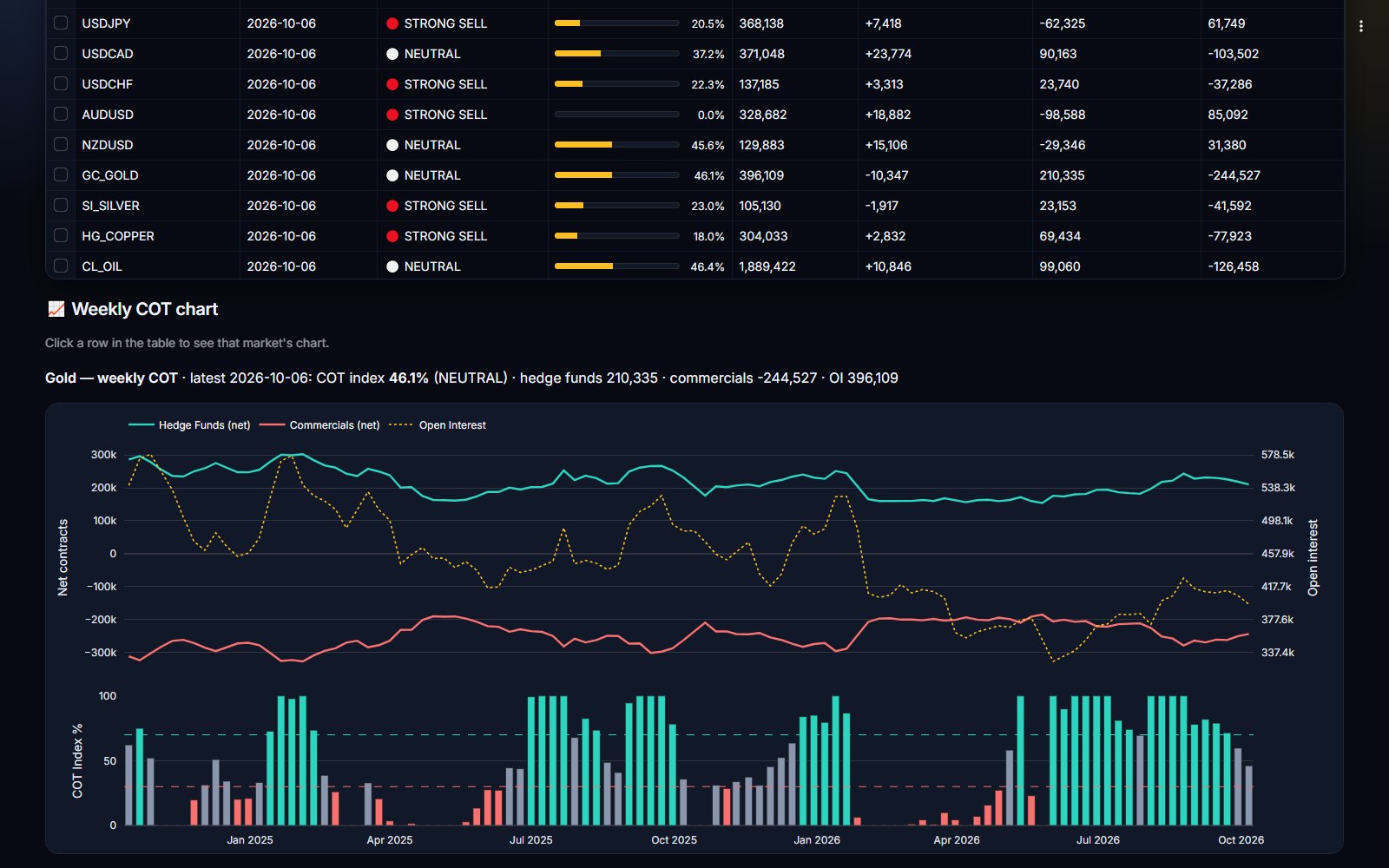
ICC Terminal's COT tab covers EURUSD, USDJPY, the pound, Swiss franc and more, with COT index signals.
FAQ
Is there a COT report for EURUSD spot?
No. The COT report covers regulated futures. The CME Euro FX future is the closest public measure of big-trader euro positioning.
How often is the euro COT data updated?
Weekly. The CFTC publishes it on Fridays with positions as of the previous Tuesday.
Which euro market does ICC Terminal track?
CME Euro FX futures, shown as EURUSD in the COT tab.