
COT and Currency Strength: A Weekly Workflow for Forex Pairs
Positioning shows who is stretched, and the strength meter shows who is moving. This simple weekly routine combines both to find a strong and a weak currency for a pair.
Sign in with Google in the app or the web terminal. No card needed.
QR code, size and install stepsWhy combine positioning and strength
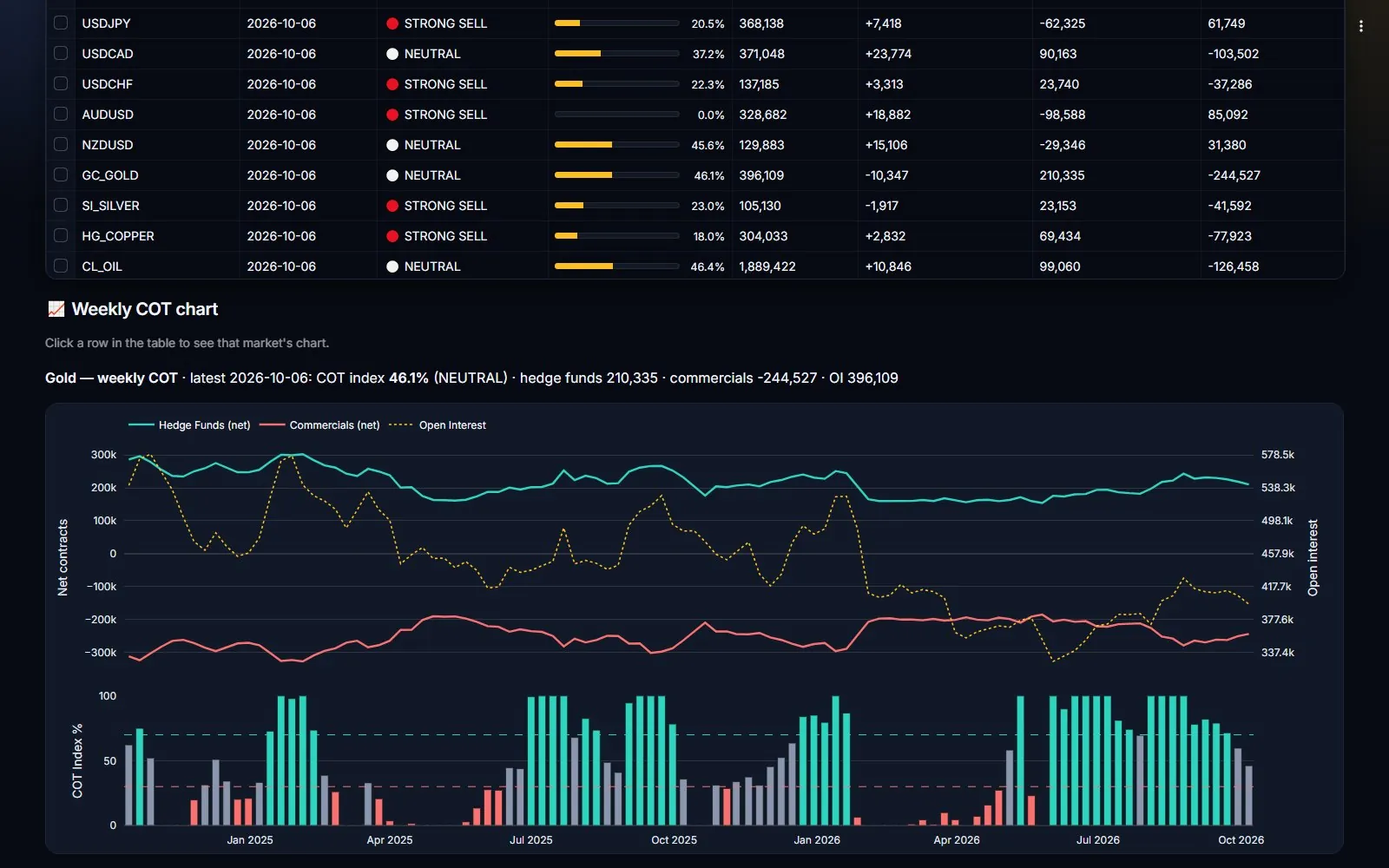
Forex is always a pair, so a good idea needs two currencies: one that is likely to be strong and one that is likely to be weak. Two ICC Terminal tools look at this from different sides. The COT report shows how large traders are positioned in currency futures at the CME, with a delay. The currency strength meter shows which currencies have actually been strong or weak recently. One is slow background, the other is current evidence. Together they give a better picture than either alone.
What each tool tells you
- COT: positioning of non-commercials or managed money, the net position and the COT index. It answers "who is stretched?". See the forex COT guide.
- Currency strength: a ranking of the major currencies built from flow and positioning data, not price alone. It answers "who is moving now?". Read how the strength meter works.
When they agree, the case is stronger. When they disagree, that is useful too: it often means a trend is ageing or a turn is early.
The weekly workflow
- Friday or Saturday: read the COT. Open the COT report this week page or the COT tab. For each major currency note the net position, its change over several weeks and the COT index. Mark currencies near an extreme. Remember the data is from Tuesday.
- Open the strength meter. Check the live ranking on currency strength today. Write down the two or three strongest and weakest currencies.
- Look for agreement. A currency that is strong on the meter and has a rising net long in the COT is a candidate for strength. The same applies on the weak side with a falling or net short position.
- Build the pair. Pair the strongest candidate against the weakest. If EUR looks strong and JPY weak, then EURJPY is on your watchlist. See the data pages for yen, Swiss franc and New Zealand dollar.
- Wait for price. Use your own chart analysis for the entry. Positioning and strength give direction; they do not give the exact entry or stop.
- Size the trade. Use the lot size calculator and set a minimum reward with the risk-reward calculator.
How to read agreement and disagreement
Both point the same way
A currency is climbing in the strength meter and speculators have been building a net long for several weeks. This is a healthy trend: new money is entering and price confirms it.
Strength is high but the COT is at an extreme
The move is real, but positioning is crowded. This is the moment to be careful with new entries and to look for exits, not to chase.
COT is extreme but strength is flat
The market is stretched but nothing is happening yet. Put it on the watchlist and wait for strength to turn first.
Mistakes to avoid
- Using the COT as an entry trigger. It is a weekly background, not a timing tool (see COT report mistakes).
- Forgetting that the futures positions are in one currency against the US dollar, so cross pairs need extra thinking.
- Checking only once. Strength changes during the week, so re-check before you trade.
Keep it small and repeatable
You do not need to watch every pair. Limit the list to the two or three best candidates each week, write the reason for each in one line, and review the list after the weekly COT release. If a candidate loses support, for example the strength meter turns or the COT trend reverses, remove it without regret. A short list and a written reason make it easier to see later which part of the routine really adds value and which part is only noise. Over time, keep a note of which combinations worked for you, but remember that past results do not guarantee future ones.
How to use it with ICC Terminal
In ICC Terminal the COT tab and the currency strength view are side by side, so the routine takes about fifteen minutes each week. The strength guide and the COT guide explain every screen, and the free trading tools help with sizing and session timing.
FundedNext Partner link We may earn a commission if you buy through it. Prop firm challenges are paid evaluations; most traders don't pass. Trade only what you can afford to lose.
From weekly bias to a pair
Use the COT tab and the currency strength meter together to pick strong and weak currencies.
Get these numbers every day in the app – 14 days of VIP free
Get the COT report every Saturday on Telegram → t.me/icccharts
CFDs and futures carry a high risk of losing money. We may earn a commission if you open an account through this link.
FAQ
Can I use the COT report and the currency strength meter together?
Yes. The COT gives the slower, weekly positioning picture and the strength meter gives the current picture. Using both helps you choose a strong and a weak currency for a pair.
How often should I check them?
Read the COT once a week after Friday's release, and check the strength meter again before each trade because it changes during the week.
What if the two tools disagree?
Treat it as a warning, not as a failure. It often means the trend is ageing or a turn is early, so wait for price to confirm before acting.